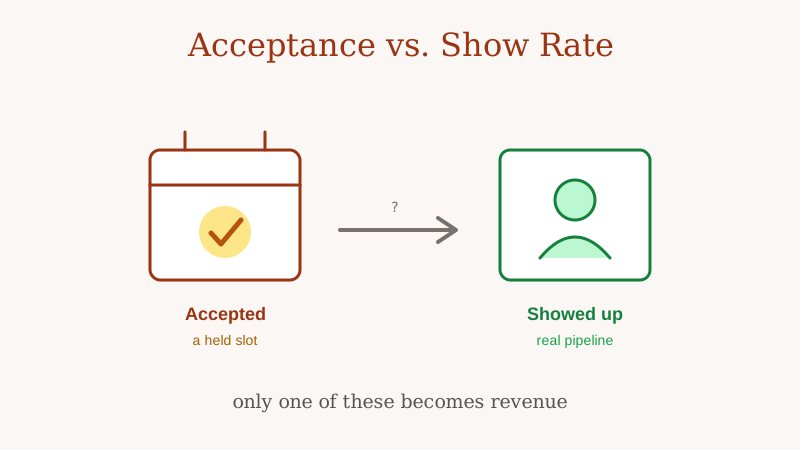
Every team that runs calendar-invite outreach eventually builds a dashboard, and the number that lands at the top is almost always acceptance rate. It is easy to measure, it goes up when you tune subject lines, and it feels like progress.
It is also, on its own, close to meaningless. An accepted invite that no-shows produces zero pipeline, zero revenue, and a held slot on your rep’s calendar that could have gone to a real conversation. The metric that actually maps to outcomes is show rate — and optimizing for acceptance while ignoring show rate quietly inflates your numbers while your pipeline stays flat.
This post explains why the two metrics diverge, why chasing acceptance alone backfires, and how to move the number that matters.
The Vanity Trap of Acceptance Rate
Acceptance rate measures whether a prospect clicked “yes” on a calendar invite. Calendar invites are unusually good at generating that yes, because accepting is a single tap and the invite lands directly on the calendar where it demands a quick decision. That is exactly why invite outreach cuts through — and exactly why acceptance rate is so easy to juice.
You can push acceptance up with a punchy subject line, a low-friction time, and a vague enough description that saying yes costs nothing. The problem is that some of those easy yeses are reflexive, not committed. The prospect accepted to clear the notification, not because they intend to show up and have a real conversation.
So you end up with a beautiful acceptance number and a calendar full of slots that evaporate when the time comes. The dashboard says you’re winning. The pipeline says otherwise.
Why Show Rate Is the Real Number
Show rate measures the only thing that produces pipeline: did a human actually join the meeting. Walk the funnel and it becomes obvious which metric to anchor on.
| Metric | What it measures | What it is worth |
|---|---|---|
| Acceptance rate | Prospect tapped “yes” | A held slot — potential only |
| Show rate | Prospect actually attended | An actual conversation — real pipeline |
A campaign with a 25% acceptance rate and an 80% show rate beats a campaign with a 40% acceptance rate and a 35% show rate — even though the second one looks far healthier on a dashboard. Run the math on 100 invites:
- Campaign A: 25 accept × 80% show = 20 real meetings
- Campaign B: 40 accept × 35% show = 14 real meetings
Campaign B “wins” on the headline metric and loses on the only metric that pays. If you optimize for acceptance, you will systematically pick the worse campaign.
What Drives the Gap Between Accept and Show
The space between “yes” and “showed up” is where your real ROI is won or lost. A few factors drive most of the gap:
- Clarity of value. A prospect who accepted without understanding why the meeting helps them has no reason to prioritize it later. Vague invites buy cheap acceptances and expensive no-shows.
- Time-to-meeting. The further out the slot, the more life intervenes. Acceptances for meetings booked a week out decay far faster than ones two or three days out.
- Confirmation and reminders. A single, well-timed reminder that re-states the value (not just “reminder: meeting at 2pm”) meaningfully lifts show rate.
- Qualification. Some no-shows are people who should never have accepted — wrong role, wrong timing, no real intent. Tightening targeting upstream raises show rate even if it lowers raw acceptance.
Notice that several of these lower acceptance rate while raising show rate. That is the whole point: the two metrics can move in opposite directions, and only one of them correlates with revenue.
How to Actually Move Show Rate
If you want a calendar that converts instead of a dashboard that flatters, instrument and optimize for show rate directly:
- Report show rate first, acceptance second. Put the number that maps to pipeline at the top of the dashboard. What you measure first is what the team optimizes for.
- Write invites that pre-qualify. State the specific outcome of the meeting in the description. A prospect who accepts a clear invite is a prospect who intends to show.
- Compress time-to-meeting. Offer near-term slots. The shorter the gap between yes and the meeting, the less acceptance decays into a no-show.
- Send a value-restating reminder, not a logistics reminder. Remind them what they get, not just when.
- Segment your no-shows. If a slice of accounts accepts and never shows, that is a targeting signal, not just an execution problem.
The Bottom Line
Acceptance rate tells you your invite is good at getting a tap. Show rate tells you your outreach is good at producing conversations. Only the second one becomes pipeline.
Kali is built around the metric that matters — getting the right prospects to actually show up, not just rack up easy acceptances that quietly disappear. If your invite dashboard looks great but your pipeline doesn’t reflect it, stop optimizing the tap and start optimizing the show. That is where the ROI has been hiding the whole time.