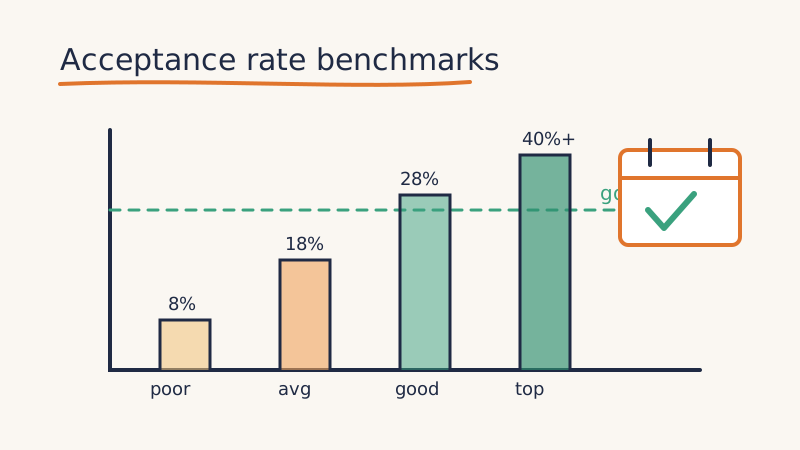
The first question every team asks after running a cold calendar invite campaign is simple: is this number good? You sent 300 invites, 42 came back accepted, and now you are staring at a 14 percent acceptance rate with no idea whether to celebrate or start over. Without a benchmark, a raw percentage tells you nothing. It could be a strong result for a cold C-suite list, or a weak one for a warm re-engagement play.
This piece gives you the benchmarks. We will define acceptance rate cleanly, lay out realistic ranges by audience and list quality, walk through the levers that actually move the number, and show you how to read your own result in context instead of against a made-up target.
What acceptance rate actually measures
Acceptance rate is the share of delivered calendar invites that a recipient accepts. The formula is deliberately narrow:
Acceptance rate = accepted invites / delivered invites
The word delivered matters. If you send 300 invites but 40 bounce or never land, your denominator is 260, not 300. Measuring against sends instead of deliveries inflates the problem and hides a deliverability leak. That is why the health of your sending list sits underneath every benchmark on this page. An invite that never arrives cannot be accepted, and a list full of stale or invalid addresses will drag your rate down for reasons that have nothing to do with your message.
Acceptance is also not the finish line. A booked meeting is worth nothing if the prospect does not show. So most teams track two numbers side by side:
- Acceptance rate, which measures whether your invite earned a yes.
- Show rate, which measures whether the accepted meeting actually happened.
This article focuses on acceptance. If your accepted meetings are evaporating before they start, that is a separate problem with its own fixes, and it deserves its own attention.
The benchmarks: what a good acceptance rate looks like
There is no single right number, because acceptance rate moves with how cold the audience is, how senior the buyer is, and how clean the list is. Here is a realistic map for a well run campaign in 2026.
Fully cold, no prior relationship
This is the hardest scenario: a prospect who has never heard of you, on a purchased or scraped list, receiving your invite out of nowhere.
- Below 8 percent: something is wrong. Usually the list, the deliverability, or a message that reads like spam.
- 8 to 15 percent: a normal, healthy range for genuinely cold outreach.
- 15 to 25 percent: strong. Your targeting, timing, and message are working together.
- Above 25 percent: excellent, and worth studying so you can repeat it. Double check that your list is truly cold and not secretly warm.
Semi-warm: engaged but not in a deal
Prospects who opened an email, visited your site, attended a webinar, or matched a clear buying signal will accept at meaningfully higher rates.
- 15 to 30 percent is the healthy band here.
- Above 30 percent is common when the signal is fresh and the timing is tight.
Warm re-engagement: past conversations and dormant pipeline
Reviving a ghosted deal or reaching a prospect you have already spoken with is the easiest invite to get accepted.
- 25 to 45 percent is realistic.
- The best re-engagement plays, aimed at people who genuinely know you, can clear 50 percent.
By seniority
Seniority pulls in two directions at once. Senior buyers guard their calendars harder, but they also make faster yes or no decisions and value a tightly scoped ask.
- Individual contributors and managers tend to accept at moderate rates and reschedule often.
- Directors and VPs sit in the middle and reward specificity.
- C-suite produces lower raw acceptance but higher quality when they do say yes, because a busy executive does not accept a fifteen minute hold unless they see a reason.
Use these ranges as a compass, not a scoreboard. A 12 percent rate on a cold CFO list can be a better result than 30 percent on a warm list of junior users.
Why calendar acceptance beats cold email reply rates
It helps to anchor these numbers against the channel most teams are leaving. Cold email reply rates for B2B outreach commonly sit in the low single digits, and positive replies (the ones that actually lead to a meeting) are a fraction of that. When a team switches a segment to cold calendar invites with a tool like Kali, the comparison is not reply rate to reply rate. It is a soft reply on email versus a concrete accept, decline, or propose new time on the calendar.
That is the structural advantage. A calendar invite lands on a different surface, forces a small decision, and turns a vague maybe into a booked hold. Even a modest 12 percent acceptance rate on a cold list often produces more real meetings than a cold email sequence sending to the same names, because the mechanic asks for a specific yes instead of hoping for a reply. If you want the full side by side, we break it down in our comparison of cold calendar invites versus cold email.
The levers that move your acceptance rate
If your number is below the benchmark for your segment, the fix is almost always one of these five levers.
1. List quality and deliverability
This is the first thing to check and the most common culprit. If a meaningful share of your invites never arrive, your acceptance rate is capped before your message gets a vote. Invalid addresses, spam traps, and role accounts all drag the denominator and can hurt your sender reputation on top of it. Validating your list before you send, with a service like Scrubby, keeps your delivered number honest and protects the reputation that gets future invites into the inbox at all. A clean list will not fix a weak message, but a dirty list will sink even a great one.
2. Targeting fit
An invite accepted at a high rate is usually an invite sent to someone who actually has the problem you solve. Broad, loosely qualified lists produce low acceptance and low quality even when a few say yes. Tightening your ideal customer profile, and layering in a buying signal where you can, will lift acceptance more than any subject line tweak.
3. The invite message
The title and description of the calendar hold do real work. A vague title like “Intro call” earns fewer accepts than a specific one that names the reason and the payoff in a few words. Keep the ask small: fifteen minutes, one clear topic, a specific value the prospect gets from the time. Respecting the calendar reads as respecting the person.
4. Timing
When the invite lands changes whether it gets seen while the prospect is at their desk or buried under overnight noise. Mid morning and early afternoon on midweek days tend to outperform early Monday and late Friday. Time zone alignment matters just as much for distributed lists, since an invite that arrives at 6 a.m. local time competes with everything else that piled up overnight.
5. Follow up
A single unaccepted invite is not a no. It is often a not yet. A short, polite follow up sequence after an unanswered invite recovers a real share of meetings that the first touch missed. Teams that stop after one send systematically under count what the channel can produce.
How to read your own number
Do not compare your rate against someone else’s headline figure from a case study. Compare it against the right band for your own segment, then look at the trend.
- Segment before you judge. Split cold, semi-warm, and warm into separate reports. A blended average hides which motion is healthy and which is leaking.
- Confirm the denominator. Measure against delivered, not sent. If you cannot see deliveries, fix your measurement before you judge your message.
- Watch the trend, not the snapshot. A rate that climbs week over week as you tune targeting and timing matters more than any single number. Falling acceptance on a stable list usually signals a deliverability or reputation problem worth investigating fast.
- Pair it with show rate. High acceptance and low show means you are booking the wrong people or setting weak expectations. High acceptance and high show is the real win.
The bottom line
A good cold calendar invite acceptance rate is 8 to 15 percent for genuinely cold audiences, 15 to 30 percent when there is a signal or prior touch, and 25 percent or higher for warm re-engagement. But the benchmark only matters once you have measured against delivered invites, segmented by how cold the audience is, and checked that your list is clean enough to give your message a fair vote.
If your number sits below the band for your segment, start with the list and deliverability, then tighten targeting, then sharpen the invite itself. Those three fixes recover more meetings than any clever subject line. When you are ready to run the channel properly, Kali handles the sending, timing, and follow up so your acceptance rate reflects your message and your list, not the mechanics underneath.