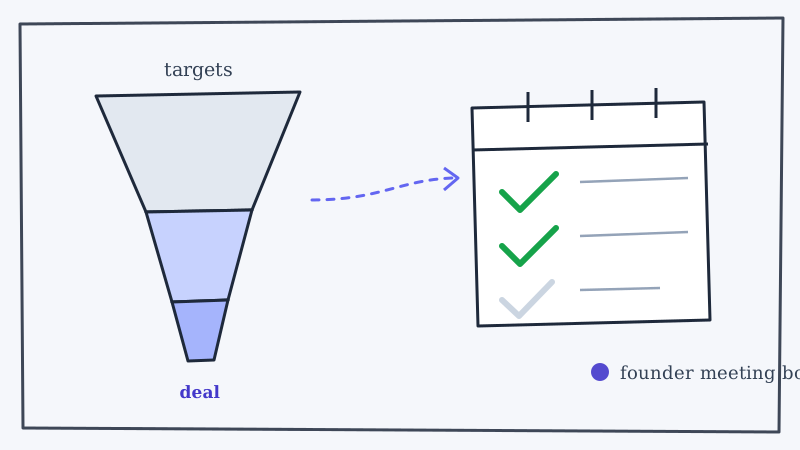
Every private equity and search fund team says the same thing about sourcing: the best deals are the ones you find before they hit a banker’s process. Proprietary deal flow is the whole game. A company that runs a competitive auction gets bid up, closes at a premium, and hands you a return profile that looks nothing like the one in your model. The one you reach directly, before anyone else is in the room, is where the alpha lives.
The problem is that “reach the founder directly” is easier to write in an investment thesis than to execute. Owners of good private companies are busy, protective of their time, and buried under a steady stream of inbound from investors who all sound identical. A cold email that opens with “we are a lower middle market fund focused on…” is the single easiest thing in that inbox to archive. The founder has seen a hundred of them, and yours does not look different.
Cold calendar invites change the physics of that first touch. Instead of asking a founder to read your pitch and reply, you propose a specific fifteen minute conversation at a specific time. This piece walks through why the channel fits deal origination unusually well, and how to run it without looking like every other fund in the founder’s inbox.
Why deal origination is a near perfect fit for this channel
Cold calendar invites work because they land on a different surface than email. When you send one, it appears as a pending event on the recipient’s calendar, and most calendar clients also drop a notification into their inbox. The founder has to make a decision: accept, decline, or propose a new time. A cold email can sit unread forever. A calendar hold forces a small action, and that small action is exactly what you are missing when you cold email an owner who has no reason to write back yet.
Three things about PE sourcing make this fit especially well.
First, your volume is intentionally low. You are not blasting ten thousand contacts a week. A single sourcing associate might be working a curated list of a few hundred targets that match a specific thesis: a fragmented vertical, a certain revenue band, an owner nearing retirement. The channel rewards precision over scale, which matches how good sourcing already operates. A calendar invite outreach tool like Kali is built for this kind of targeted, low volume, high intent sending rather than spraying a giant list.
Second, the person you want is nameable. In most B2B outbound you are guessing which of eight stakeholders owns the problem. In lower and middle market sourcing, the decision maker is usually the founder, the owner, or the CEO, one person whose name is on the door. That clarity means every invite goes to exactly the individual who can say yes to a conversation.
Third, your title carries weight. An invite from a named partner or principal at a fund reads very differently than one from an anonymous associate. Founders assume a partner would not personally hold time on their calendar unless there were a real reason. Use that. The credibility of who is sending is doing half the work before the founder reads a single word.
Step one: build a thesis-tight target list
The fastest way to burn this channel is to send invites to a broad list of “companies in the space.” A pending meeting from an investor the owner has never heard of, with no clear reason attached, feels intrusive. You will collect declines and the occasional spam complaint, and both hurt the sending reputation of the domain you rely on for every other founder you want to reach.
Sourcing outbound should start with a list where you can say, in one sentence, why this specific company fits your thesis. Not “manufacturing companies in the Midwest.” More like “family owned precision machining shops doing eight to twenty million in revenue where the founder is over sixty and there is no obvious succession plan, because that owner is the most likely to want a partner who can take chips off the table.” When your reason is that specific, the meeting request stops looking like spam and starts looking like someone did their homework.
For each target, find the owner’s real business email, not a generic info@ address that a front desk monitors. This is where a lot of sourcing outreach quietly fails. The invite goes to an inbox nobody with signing authority ever checks, and you conclude the channel does not work when the truth is the message never reached a decision maker.
Before you send a single invite, validate those addresses. Calendar invites misfire the same way cold emails do, and a bad address means the invite either bounces or lands on the wrong calendar entirely. Running the list through an email verification tool like Scrubby first protects your deliverability and, more importantly, protects the reputation of the fund domain you cannot afford to get flagged. A partner’s calendar invite landing in spam is a worse outcome than never sending it.
Step two: write the invite like a person, not a fund
The body of a cold calendar invite is short by design, and that constraint is a gift. You cannot fit a two paragraph fund overview into a calendar hold, so do not try. The founder does not care about your assets under management on the first touch. They care about why you are on their calendar.
A strong sourcing invite does three things in a few lines. It names the specific reason you are reaching out to them and not a generic peer. It makes the ask small and concrete, a short intro call rather than a full diligence conversation. And it signals that you are a real person, ideally the partner whose name is on the invite, not an automated sequence.
Something like: “Jane, I lead sourcing at [fund] and we back founder owned [industry] businesses in your size range. I am not here to run a process. Fifteen minutes to understand how you think about the next chapter of the company, whenever suits you.” That reads like a human who researched the company. It respects that the founder may not be selling. It lowers the stakes to a conversation rather than a transaction.
Step three: treat the calendar as a system, not a one off
The teams that get real deal flow from this channel do not send a single invite and move on. They run it as a repeatable motion. A first invite that goes unanswered gets a light second touch, a short note or a fresh time proposal, spaced out so it never feels like pressure. Every accept, decline, and propose new time is logged, because a decline today from a founder who is not ready is a warm lead in eighteen months when they are.
That relationship compounding is the real prize in sourcing. You are not trying to close a deal on the first call. You are trying to become the first fund the founder thinks of when they finally decide to explore options. A booked fifteen minute call, even one that goes nowhere immediately, plants you in that position long before a banker ever gets hired.
The mechanics matter here. Sending calendar invites at scale from a partner’s real address means paying attention to deliverability, timing across the founder’s time zone, and keeping your accept rates healthy so calendar providers keep trusting your domain. That is the operational layer Kali is designed to handle, so your associates spend their time on thesis and targeting rather than fighting the plumbing.
The bottom line
Proprietary deal flow comes from getting in front of owners before they are in market, and the first touch is where most funds lose. Cold email asks a busy founder to notice you in a crowded inbox and reply, which almost none of them do. A cold calendar invite proposes a specific time and forces a small decision, which is exactly the nudge a thesis fit founder needs to have a first conversation.
Build a list tight enough that every founder can see you did your homework, validate the addresses so your invites actually land, write the request like a person rather than a fund, and run it as a system that compounds relationships over quarters. Do that, and the channel stops being another cold outreach experiment and becomes a genuine source of the meetings that turn into proprietary deals.